
Apps
How Garage2Global Empowers Startups in App Development: A Step-by-Step Guide

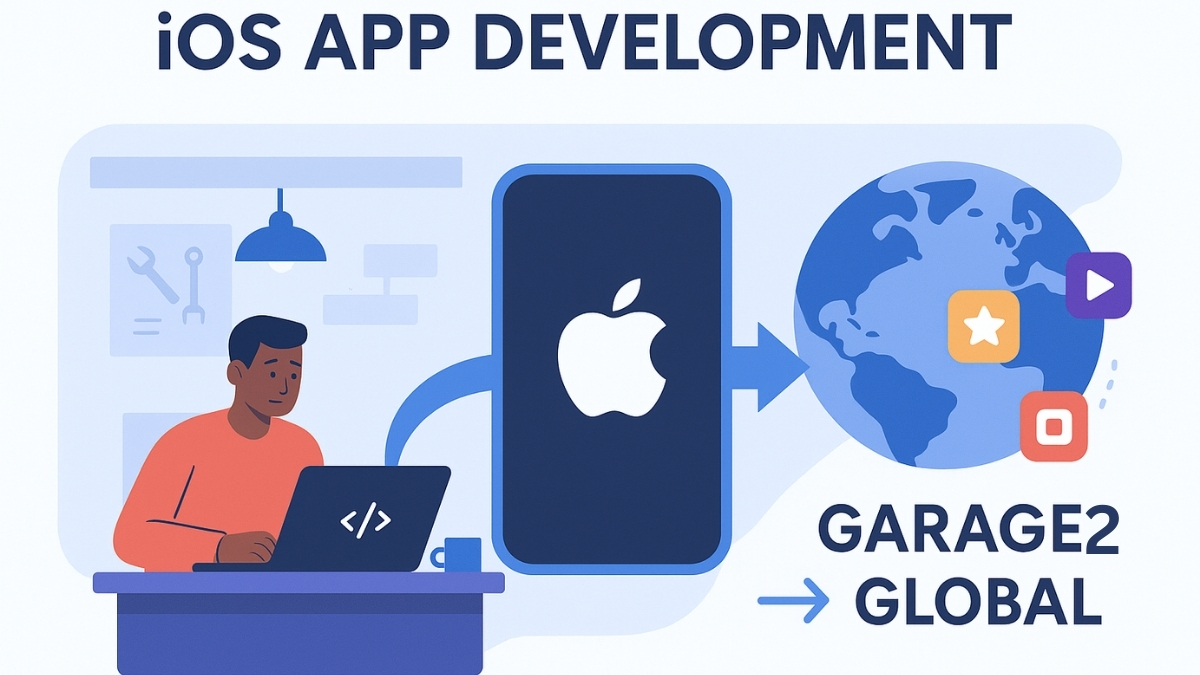
In today’s fast-moving digital world, having a mobile app can be a game-changer for any startup. Apps are no longer just tools for established businesses; they’re essential for startups looking to engage customers, streamline operations, and compete in a crowded marketplace. However, the journey to building a successful app is often riddled with challenges, particularly for startups with limited resources and technical expertise. That’s where IOS App Development From Garage2global, a premier startup accelerator, comes in—offering mentorship, resources, and technical support to guide your startup through the complexities of app development.
Why Mobile Apps Are Crucial for Startups
For startups, the importance of mobile apps cannot be overstated. The right app can help you establish your brand, engage with customers, and operate more efficiently. Mobile apps offer startups a platform to be closer to their customers—literally. With apps, you can send push notifications, promote in-app purchases, and provide real-time customer support, making it easier to retain your audience and build loyalty. Furthermore, apps provide an additional revenue stream through in-app sales or advertisements, which can significantly boost a startup’s financials.
Apps also help startups stand out in the competitive tech landscape. In a world where attention spans are short, an app keeps your brand accessible at all times. However, the process of app development is anything but simple. From conceptualization to launch, creating an app requires careful planning, skilled developers, a solid business strategy, and effective marketing. Most startups simply don’t have all these resources readily available, and this is where partnering with a program like Garage2Global can make a world of difference.
The Common Challenges Startups Face in App Development
While the potential of mobile apps for startups is vast, the road to building a successful app is fraught with challenges. The most significant hurdle is often a lack of resources. Startup budgets are typically tight, and app development—especially when building a high-quality, scalable app—can be expensive. The cost of hiring developers, designers, and project managers can quickly eat into your limited funds.
Another major challenge is technical expertise. Many startups are founded by entrepreneurs who may not have extensive technical backgrounds. This can make it difficult to translate business ideas into functional, user-friendly applications. Without a skilled in-house team, the development process can become time-consuming and prone to errors.
Additionally, strategic direction is a challenge. Many startups lack the experience to plan a clear development roadmap. Without a solid strategy, app development can become a trial-and-error process, leading to wasted resources and missed opportunities.
What Garage2Global Offers to Startup Entrepreneurs
This is where Garage2Global comes in. Garage2Global is an accelerator that specifically focuses on helping startups succeed in their app development journey. They offer a comprehensive, multi-faceted approach to app development, bringing together the tools, resources, and expertise needed to take your idea from concept to launch. Their program is designed to help startups in every phase of development, from initial ideation to market launch.
Mentorship is one of the program’s core offerings. With seasoned entrepreneurs and successful startup founders as mentors, Garage2Global helps startups develop the right mindset and strategy for creating an impactful mobile app. Their team of experts provides ongoing guidance throughout the app development process, ensuring that startups stay on the right path.
Garage2Global also provides funding opportunities to help startups navigate the often high costs associated with app development. The program connects startups with potential investors, offering them the capital needed to cover development expenses. Beyond financial support, the Garage2Global team also offers technical expertise, providing access to a network of developers, designers, and project managers who can bring your vision to life.
Finally, Garage2Global has a global network that startups can tap into. The connections available through the program open doors to valuable partnerships, collaborations, and customer acquisition channels.
Why Partnering with Garage2Global Makes Sense for Startups
Partnering with Garage2Global provides several clear advantages for startups embarking on the app development journey:
Expert Mentorship
One of the most valuable aspects of Garage2Global’s program is its mentorship. With access to seasoned entrepreneurs who have already navigated the startup landscape, your team can receive actionable insights and advice. This guidance is crucial in helping you avoid common mistakes and optimize your app development process.
Cost-Effective Solutions
Startups are often cash-strapped, and developing a high-quality app can be an expensive undertaking. Garage2Global helps ease the financial burden by providing funding and access to discounted services. Their network of investors can offer crucial capital to ensure that your app development process moves forward without financial stress.
End-to-End Support
Garage2Global goes beyond just helping with coding and design. Their program includes business strategy support, helping you shape your app’s vision in alignment with your business goals. Their experts also assist with branding and marketing, ensuring that your app doesn’t just get built—it gets noticed.
Access to a Global Network
With Garage2Global’s international reach, startups can leverage connections that they otherwise might not have access to. This global network opens up opportunities for collaborations, partnerships, and even potential customers that could make a significant impact on your startup’s growth.
The Process of App Development with Garage2Global
Garage2Global’s approach to app development is structured yet flexible, ensuring that startups get the best possible outcome at every stage of the process.
Ideation and Conceptualization
The journey begins with a deep dive into your idea. Garage2Global works closely with startups to refine their app concepts, ensuring they are feasible, scalable, and aligned with market needs. This stage helps crystallize the startup’s vision and turns it into a clear, actionable roadmap.
Wireframing and Design
The next step is creating the user interface (UI) and user experience (UX). Garage2Global’s team of designers ensures that your app is not only functional but visually appealing and easy to navigate. This phase focuses heavily on the user journey, ensuring the app offers a seamless and engaging experience.
Development and Testing
Once the design is finalized, the app enters the development phase. Garage2Global’s experienced developers take over to build the app, ensuring that it’s stable, secure, and optimized for performance. Rigorous testing ensures that bugs are caught early and that the app meets the highest standards of quality.
Launch and Marketing
The final stage involves launching the app and spreading the word. Garage2Global helps startups create a buzz around their app, providing marketing strategies to boost visibility and downloads. Whether it’s through social media campaigns or PR outreach, Garage2Global ensures that your app gets the attention it deserves.
Best Practices for Building Successful Startup Apps
Creating a successful mobile app is a combination of strategy, design, and execution. To increase your chances of success, consider these best practices:
-
Focus on User Experience (UX): An app that’s difficult to navigate will turn users away. Startups should prioritize a clean, intuitive design that makes it easy for users to accomplish their goals.
-
Plan for Scalability: A successful app is one that grows with your business. Startups should design their apps with scalability in mind, ensuring they can handle an increase in users and features as the company expands.
-
Cross-Platform Development: In today’s mobile world, your app should work seamlessly across both iOS and Android platforms. Developing a cross-platform app ensures you reach a larger audience and reduces development costs.
Case Study: Startup Success with Garage2Global
Take the example of Startup X, a small e-commerce company that turned to Garage2Global for help with their app development. Initially, they had limited technical expertise and struggled with defining the scope of their app. However, through Garage2Global’s mentorship and technical support, they were able to design and develop a fully functional mobile app that allowed customers to easily browse products, make purchases, and track shipments.
With the app launched, Startup X saw a significant boost in sales—by over 40% within just six months—and customer engagement skyrocketed. This success story exemplifies how, with the right guidance, any startup can turn its app idea into a thriving business tool.
Conclusion: IOS App Development From Garage2global
Building an app is a powerful way for startups to reach and engage with customers, but it requires a combination of strategy, technical expertise, and resources. Partnering with Garage2Global can provide all these elements, offering startups the mentorship, funding, and technical support they need to succeed. With a proven track record and a global network of experts, Garage2Global is the ideal partner for any startup ready to bring their app idea to life.
If you’re ready to take your startup to the next level, Garage2Global could be your gateway to building a successful app that not only meets your business goals but also sets you up for long-term growth.
FAQs
What is Garage2Global, and how can it help my startup?
Garage2Global is a startup accelerator program designed to help entrepreneurs turn their app ideas into successful products. They provide mentorship, technical expertise, funding opportunities, and access to a global network of professionals. By partnering with Garage2Global, startups receive the resources they need to overcome challenges in app development, including strategic guidance, design, and marketing support.
How much does it cost to join the Garage2Global program?
The cost of joining the Garage2Global program varies depending on your specific needs and the services you require. However, Garage2Global often helps startups secure funding and offers access to discounted services, reducing the financial burden of app development. For more details on pricing and funding opportunities, it’s best to contact Garage2Global directly to discuss your startup’s needs.
Can Garage2Global help with both Android and iOS app development?
Yes! Garage2Global’s development team is experienced in building apps for both iOS and Android platforms. They focus on cross-platform development, ensuring that your app functions seamlessly across all devices and operating systems. This approach allows you to reach a wider audience and save time and resources during the development process.
What kind of startups can benefit from Garage2Global’s program?
Garage2Global primarily works with early-stage startups that are in the process of developing their mobile apps. Whether you’re in the tech, retail, healthcare, or education space (among others), Garage2Global can provide tailored support to help you bring your app idea to life. Their program is ideal for startups with limited technical expertise or resources, as they guide you through the development process from start to finish.
How long does the app development process take with Garage2Global?
The timeline for app development with Garage2Global depends on the complexity of your app and the specific goals you have. Typically, the development process ranges from a few months to over half a year, starting with the initial ideation and design phases through to development, testing, and launch. Garage2Global works closely with startups to ensure that deadlines are met and that your app is fully optimized before it reaches the market.



“The content://cz.mobilesoft.appblock.fileprovider/cache/blank.html path is a secure Android content URI used by AppBlock to manage temporary files safely. It’s not a virus or error. Instead, it reflects Android’s privacy model, which prevents apps from directly accessing each other’s data. Managing your app cache and keeping AppBlock updated ensures smooth performance and data protection.”
In the age of digital distractions, staying focused has become one of the biggest challenges for students, professionals, and even everyday smartphone users. That’s where AppBlock, a productivity app by MobileSoft, comes in. The mysterious-looking path “content://cz.mobilesoft.appblock.fileprovider/cache/blank.html” might seem like a random code, but it actually points to how AppBlock manages files and restricts access to distractions on your Android device.
Understanding how this works gives insight into how AppBlock handles data privacy, caching, and user control — making your digital experience smoother and safer.
What Is AppBlock and Its Purpose
AppBlock is a popular digital wellbeing and focus management tool. It allows users to temporarily block apps, websites, and notifications to reduce distractions. Whether you’re working, studying, or simply trying to spend less time on social media, AppBlock gives you the control to create a distraction-free environment.
The app works by managing access permissions, using Android’s FileProvider framework to handle internal files and cached data safely. This ensures that no external app can misuse your information or bypass restrictions.
Understanding “content://cz.mobilesoft.appblock.fileprovider”
The address content://cz.mobilesoft.appblock.fileprovider/cache/blank.html might look like a technical string, but it’s actually part of Android’s content URI system.
In simple terms, it’s a secure way for one app (AppBlock, in this case) to share or manage files internally without exposing them to external threats. The part “cz.mobilesoft.appblock” identifies the app, while “fileprovider” represents a built-in Android feature that manages access to stored files.
This system prevents other apps from directly reading or writing to your device’s storage, helping keep sensitive data private and preventing potential leaks.
How AppBlock Uses File Providers
AppBlock uses FileProvider for two main reasons: privacy and efficiency. Instead of directly saving blocked site data or temporary cache in an open folder, the app uses the FileProvider method to generate a content:// URI, which is accessible only within the app’s secure environment.
The “blank.html” file, often found in the cache directory, acts as a placeholder or redirect file when AppBlock blocks certain websites or content. So, if you try to open a blocked webpage, AppBlock may redirect you to a blank screen, using that “blank.html” file path.
This design prevents exposure to blocked content and maintains the app’s focus-driven environment.
Privacy and Data Security in AppBlock
Privacy is at the heart of AppBlock’s design. By using FileProvider instead of traditional file paths, AppBlock ensures that other apps or third-party services cannot access your blocked content, browsing data, or usage habits.
Additionally, AppBlock doesn’t store personal data on external servers unless explicitly needed for synchronization. This gives users a sense of confidence that their private information remains on their device.
With the growing awareness of data misuse and privacy breaches, AppBlock’s approach to handling local files through secure URIs is a step forward in mobile data protection.
Benefits of Using AppBlock for Digital Wellbeing
AppBlock isn’t just a technical app; it’s a tool for improving your mental health and productivity. Here are some benefits:
-
Increased Focus: By blocking distracting apps and websites, you can stay present and productive.
-
Better Time Management: Set schedules and limits for entertainment apps to make more time for important tasks.
-
Improved Mental Health: Reducing screen time can help decrease stress and anxiety levels.
-
Parental Control: AppBlock can also be used by parents to manage their children’s device usage safely.
Each feature works through a combination of user permissions, background restrictions, and the FileProvider structure to ensure smooth performance.
How to Use AppBlock Effectively
To get the most out of AppBlock, start by identifying your biggest digital distractions. Then, follow these steps:
-
Download and Install AppBlock from the Google Play Store.
-
Create a Profile — such as “Work Mode” or “Study Mode.”
-
Select Apps or Websites to Block within that profile.
-
Set Timers or Schedules to control when the profile activates.
-
Enable Strict Mode if you want to prevent yourself from disabling the app easily.
As you use it, AppBlock creates temporary cache files — including blank.html — to handle restricted pages efficiently.
Common Issues and Fixes (Blank.html Cache Problem)
Some users notice messages or paths like content://cz.mobilesoft.appblock.fileprovider/cache/blank.html appearing when browsing or using blocked sites. This usually means AppBlock has intercepted your request and redirected it to a blank file to enforce the restriction.
If this file appears frequently or causes slow performance:
-
Clear AppBlock Cache: Go to Settings → Apps → AppBlock → Storage → Clear Cache.
-
Update the App: Outdated versions may store too many cache files.
-
Reboot Your Device: This helps clear temporary data from Android’s memory.
These simple steps usually fix the issue without affecting your profiles or preferences.
AppBlock Alternatives
While AppBlock is one of the best focus apps available, you might explore alternatives if you want different features:
-
Stay Focused – Provides detailed usage analytics.
-
Digital Detox – Uses phone lockouts to build focus habits.
-
Freedom App – Blocks distractions across multiple devices.
Each of these uses similar caching and content management methods, but AppBlock stands out for its privacy-focused design and easy user interface.
AppBlock’s Role in the Modern Digital Landscape
As remote work, online learning, and social media usage increase, the need for self-control apps like AppBlock becomes stronger. People now understand that productivity doesn’t only depend on motivation but also on environmental control minimizing distractions and managing screen time.
The “blank.html” cache mechanism and FileProvider security are subtle but essential parts of how AppBlock empowers users to create better digital habits safely and efficiently.
Final Thoughts
The path content://cz.mobilesoft.appblock.fileprovider/cache/blank.html is more than a technical string it represents the core mechanism that helps AppBlock protect user focus, privacy, and productivity.
AppBlock’s combination of smart blocking, secure file handling, and intuitive design makes it one of the most reliable tools for anyone aiming to build healthier digital habits. Whether you’re a professional, student, or parent, AppBlock ensures that your digital world stays distraction-free and secure.
FAQs
What does content://cz.mobilesoft.appblock.fileprovider/cache/blank.html mean?
It’s an internal Android file path used by the AppBlock app. This link points to a cached placeholder HTML file within the app’s storage and is not an actual webpage.
Is content://cz.mobilesoft.appblock.fileprovider safe?
Yes. It’s completely safe if you downloaded AppBlock from the official Google Play Store. The “content://” prefix is part of Android’s secure file-sharing system, which protects your data.
Can I delete or clear this file?
Yes. You can safely clear it by deleting the AppBlock cache through your phone’s app settings. This won’t affect the app’s main features or stored preferences.
Why does AppBlock create a blank.html file?
The blank.html file is used as a placeholder when AppBlock blocks websites or loads internal pages. It helps display a neutral screen without showing restricted content.
How do I fix AppBlock errors related to this file?
If AppBlock shows any loading issues or “blank.html” errors, clear the cache, update the app, or restart your phone. These steps usually fix temporary glitches.

In today’s hyper-connected world, mobile applications are no longer just tools; they are extensions of our lives, our entertainment, and increasingly, our livelihoods. From productivity suites to social media platforms, and especially in the realm of gaming, user expectations for performance are at an all-time high. A slow-loading app, a laggy interface, or a crashed game can instantly lead to frustration and abandonment. For developers and businesses alike, understanding and mastering mobile app performance, from the initial Android Package Kit (APK) installation to the most intricate moments of seamless play, is not just a technical challenge but a critical determinant of success. This comprehensive guide delves into the multi-faceted world of mobile app performance, exploring the journey from a raw APK file to an effortlessly engaging user experience, highlighting key optimization strategies, and addressing the unique demands of various application types, including popular gaming titles.
Understanding the APK: The Foundation of Mobile Apps
Every Android application begins its life as an APK file. An APK, or Android Package Kit, is the package file format used by the Android operating system for distribution and installation of mobile apps. It contains all the elements that an app needs to properly install on your device, including the compiled code, resources, assets, certificates, and manifest file. Essentially, the APK is the blueprint and the entire construction kit for your mobile application. The user’s first interaction with an app often involves downloading this APK, whether from the Google Play Store or an alternative source, as might be the case for a popular gaming title like. The size and efficiency of this initial package are paramount. A bulky APK can deter users with limited data plans or storage space, leading to higher uninstall rates even before the app is fully experienced. Optimizing APK size involves meticulous code shrinking, resource compression, and removing unused assets. Efficient packaging ensures that the initial download is swift, providing a positive first impression and setting the stage for a smooth installation process, which is the foundational step towards achieving seamless play. Developers must prioritize modularity, utilizing dynamic feature modules and app bundles to deliver only the necessary components to users, thereby reducing the initial download size and improving the overall app delivery experience.
The Critical First Impression: Optimizing Game Loading Times
Once an APK is installed, the next critical hurdle for any mobile application, especially games, is its loading time. The phrase “game load karne wala” perfectly encapsulates the user’s primary concern: how quickly can I get into the action? Slow loading times are a notorious source of user frustration. In a world where attention spans are fleeting, an app that takes too long to launch or transition between screens risks losing users before they even engage with its core features. Several factors contribute to loading speeds, including the complexity of the initial code execution, the volume and size of assets (images, audio, videos, 3D models) that need to be loaded into memory, and the efficiency of data retrieval, whether from local storage or remote servers.
To mitigate agonizing waits, developers employ a range of optimization strategies. One key technique is lazy loading, where non-critical assets and features are loaded only when they are needed, rather than all at once at startup. Image and audio compression, along with using modern, efficient file formats, significantly reduces the data volume that needs to be processed. Code optimization, including minimizing the number of expensive operations during startup and parallelizing tasks where possible, is also crucial. Pre-fetching data and assets in the background, anticipating user needs, can create the illusion of instant loading. Furthermore, robust error handling and network resilience ensure that even under suboptimal network conditions, the app provides feedback and attempts to load efficiently, rather than freezing or crashing. For a complex game with rich graphics, the initial splash screen is more than just branding; it’s an opportunity to perform crucial background tasks without presenting a blank or unresponsive screen, managing user expectations while the game prepares for interaction.
Beyond Loading: Delivering Seamless Gameplay
Seamless play extends far beyond just quick loading times. It encompasses the entire interactive experience, characterized by fluidity, responsiveness, and stability. This means consistently high frame rates, ensuring smooth animations and transitions that make the user interface feel alive and intuitive. Input lag, the delay between a user’s action (like a tap or swipe) and the app’s response, must be minimized to create a direct and engaging interaction. Even a slight delay can break immersion, especially in fast-paced games where split-second decisions are vital.
Effective resource management is central to achieving this level of performance. Mobile devices have finite CPU processing power, limited RAM, and precious battery life. An app that consumes excessive resources will not only perform poorly but will also drain the device’s battery rapidly, leading to a negative user experience. Developers must optimize algorithms, minimize memory leaks, and efficiently manage background processes. For a generic “wali game,” for example, this might involve culling off-screen objects, optimizing rendering pipelines, and reducing the complexity of visual effects on lower-end devices. Adaptive performance is also key; an app should ideally detect the device’s capabilities and adjust its graphical settings and resource usage accordingly, ensuring a playable experience across a wide range of hardware without compromising the core functionality or user satisfaction. Smooth scrolling, quick data updates, and the absence of unexpected freezes or crashes are all hallmarks of a truly seamless mobile app experience.
Performance in Diverse Scenarios: Online and Offline
Mobile app performance isn’t a monolithic concept; it varies significantly based on environmental factors, particularly network availability. While many modern applications are designed with an always-online philosophy, the reality of intermittent connectivity demands robust offline capabilities. Consider a game like Ludo Offline. Its very name suggests that a significant portion of its user base expects flawless performance without an internet connection. This requires careful consideration of local data storage, caching mechanisms, and the ability to process game logic entirely on the device. For such applications, performance hinges on optimizing local database interactions, efficient asset storage on the device, and ensuring that all necessary game components are available and accessible without external dependencies.
Conversely, online-centric applications face a different set of performance challenges. Network latency, bandwidth limitations, and server response times become critical bottlenecks. For these apps, optimizing data transfer protocols, employing efficient data serialization, and minimizing the number of API calls are essential. Hybrid approaches, which leverage local caching for frequently accessed data and intelligently synchronize with online servers when a connection is available, often provide the best of both worlds. This ensures that users can continue to interact with the app even when offline, with their progress or changes seamlessly uploaded once connectivity is restored, maintaining a consistent and uninterrupted experience regardless of the user’s network status.
The Stakes are High: Performance for Real Cash Applications
When money is on the line, as in the case of a “teen patti real cash” application, performance transcends mere convenience to become an absolute necessity for trust and financial integrity. The stakes are dramatically higher, and any performance hiccup can have severe consequences, from user dissatisfaction to significant financial losses. For real cash games and financial applications, performance is intricately linked with reliability, security, and real-time accuracy.
Low latency is paramount. In a real cash game, delays in displaying card draws, updating scores, or confirming transactions can lead to accusations of unfair play, loss of money, or a complete erosion of user trust. Every millisecond counts. This demands highly optimized network protocols, efficient server infrastructure capable of handling massive concurrent users, and robust client-side processing to ensure that the game state is always synchronized and accurately reflected for all players.
Security is also a performance metric here. While not directly related to speed, a breach in security or a perceived vulnerability can instantly negate all other performance optimizations. Secure communication channels (HTTPS, encryption), robust anti-cheat mechanisms, and tamper-proof client-side code are non-negotiable. The app must perform its security checks swiftly and silently without impeding the user experience. Transactions, whether deposits or withdrawals, must be processed with speed and absolute certainty. Any lag, error, or ambiguity in a financial transaction within the app can lead to severe reputational damage and regulatory issues. Therefore, performance in real cash applications is a holistic concept, encompassing not just speed and responsiveness, but also unwavering stability, impregnable security, and impeccable transactional integrity.
The Unseen Pillars: Backend and Network Optimization
While much of the user’s perceived performance is client-side, the unseen backend and network infrastructure form the backbone of any complex mobile application. A beautifully optimized front-end can still suffer from poor performance if the server is slow or the network communication is inefficient. Backend optimization involves designing scalable server architectures, using efficient databases, and optimizing API (Application Programming Interface) endpoints to respond quickly and serve data effectively. This includes minimizing the size of API responses, caching frequently requested data, and implementing robust load balancing to distribute traffic evenly across multiple servers.
Network optimization focuses on reducing the amount of data transferred and ensuring its speedy delivery. Content Delivery Networks (CDNs) are crucial for distributing assets closer to users, reducing latency. Implementing efficient data serialization formats (like Protocol Buffers or FlatBuffers over JSON for high-performance scenarios) and compressing network traffic can significantly reduce bandwidth usage and improve response times. For applications with real-time requirements, such as multiplayer games, protocols like WebSockets offer persistent, low-latency communication channels, a stark contrast to the request-response cycle of traditional HTTP. The continuous monitoring of server health, database performance, and network latency is essential to proactively identify and resolve bottlenecks before they impact the user experience.
Continuous Improvement: Testing, Monitoring, and Iteration
Achieving and maintaining high levels of mobile app performance is not a one-time task; it’s an ongoing, iterative process. It begins with rigorous testing during the development cycle. Quality Assurance (QA) teams employ a variety of tools and methodologies, including performance profiling, stress testing, and automated tests, to identify bottlenecks, memory leaks, and CPU hogs. Beta testing with real users on diverse devices and network conditions provides invaluable feedback on real-world performance.
However, the real test comes after launch. Post-release monitoring is crucial. Analytics tools provide insights into user behavior, device performance metrics (e.g., frame rates, CPU usage, battery consumption), and crash reports. Crash reporting services are vital for quickly identifying and fixing critical stability issues that degrade performance. User feedback, whether through app store reviews or direct channels, also offers qualitative data on performance perception. This continuous feedback loop informs subsequent development cycles, allowing developers to prioritize optimizations, implement improvements, and release updates that progressively enhance the app’s performance. A/B testing different optimization strategies can help determine which changes yield the most significant positive impact on user experience and engagement.
Security as a Performance Metric
While often viewed as a separate domain, security is intrinsically linked with mobile app performance, particularly in applications dealing with sensitive data or real money. A secure application performs predictably and reliably because it protects against external threats that could otherwise degrade its functionality or compromise its integrity. For a “teen patti real cash” game, robust security measures, such as data encryption for communication and storage, secure authentication protocols, and rigorous anti-cheat systems, prevent unauthorized access, data manipulation, and fraudulent activities. These measures ensure that the game operates fairly and consistently for all users. Any security vulnerability, if exploited, can lead to performance degradation (e.g., server overloads from attacks), data corruption, or complete shutdown, thereby directly impacting the app’s ability to provide a seamless and trustworthy experience. Thus, security is not merely a feature but a foundational element that enables consistent, high-quality performance and fosters user trust.
The Road Ahead: Future Trends in Mobile Performance
The landscape of mobile app performance is constantly evolving, driven by advancements in hardware, network technologies, and software development practices. The rollout of 5G networks promises unprecedented speeds and ultra-low latency, opening up new possibilities for real-time applications, cloud gaming, and augmented reality experiences. Edge computing, which processes data closer to the source (the user’s device), further reduces latency and enhances responsiveness. Artificial Intelligence and Machine Learning are increasingly being leveraged for dynamic performance optimization, allowing apps to intelligently adapt to device conditions, user behavior, and network environments in real time. For instance, AI could predict resource needs, dynamically adjust graphical fidelity, or pre-load content based on anticipated user actions. Cross-platform development frameworks continue to improve, striving to offer near-native performance while reducing development overhead. As mobile devices become even more powerful, the focus will shift from merely achieving baseline performance to delivering hyper-personalized, immersive, and instantaneously responsive digital experiences.
Conclusion
The journey from an APK to seamless play is a complex yet critical endeavor in the mobile app ecosystem. It demands a holistic approach, encompassing meticulous optimization at every stage: from the initial APK packaging and efficient loading times to smooth, responsive gameplay, robust offline capabilities, and secure, high-stakes performance for real cash applications. Backend infrastructure, network efficiency, and continuous monitoring and iteration are the unseen pillars supporting the user’s experience. In a competitive market where user expectations are continually rising, developers and businesses must prioritize performance not just as a technical specification, but as a core tenet of user satisfaction, trust, and ultimately, commercial success. Mastering mobile app performance is not just about making an app functional; it’s about crafting an effortlessly engaging digital experience that keeps users coming back for more.
-
 Crypto11 months ago
Crypto30x.com Gemini: A Deep Dive into the Future of Crypto
-
 Blog10 months ago
FeedbackMagazines.org/: A Hub for Engaging Content
-
 News9 months ago
Cristian Romero Opens Door to Tottenham Exit as Atletico Madrid Eyes £43 Million Move for Argentina Star
-
 News9 months ago
Nancy Mace Faces Criticism and Support After Heated Exchange With Trans Activist at South Carolina Event
-
 Tech11 months ago
Exploring Eporer: The Digital Revolution You Need to Know
-
 News9 months ago
Passengers From Luxury Rovos Rail Train Thank Zimbabwe for Support as They Arrive in Victoria Falls After Collision Near Gwanda
-
 Tech11 months ago
Kingxomiz: Unlocking Innovation and Personal Growth
-
 Crypto11 months ago
CrypticStreet.com Guides: Your Ultimate Resource Hub